Never A Dull Moment: Body piercing? Extreme sports? Teen pregnancy? Welcome to the action-packed world of hi/lo books
February 1, 2012
| In this Article |
| Hi/Lo Book Publishers |
| A reluctant reader's best friend |
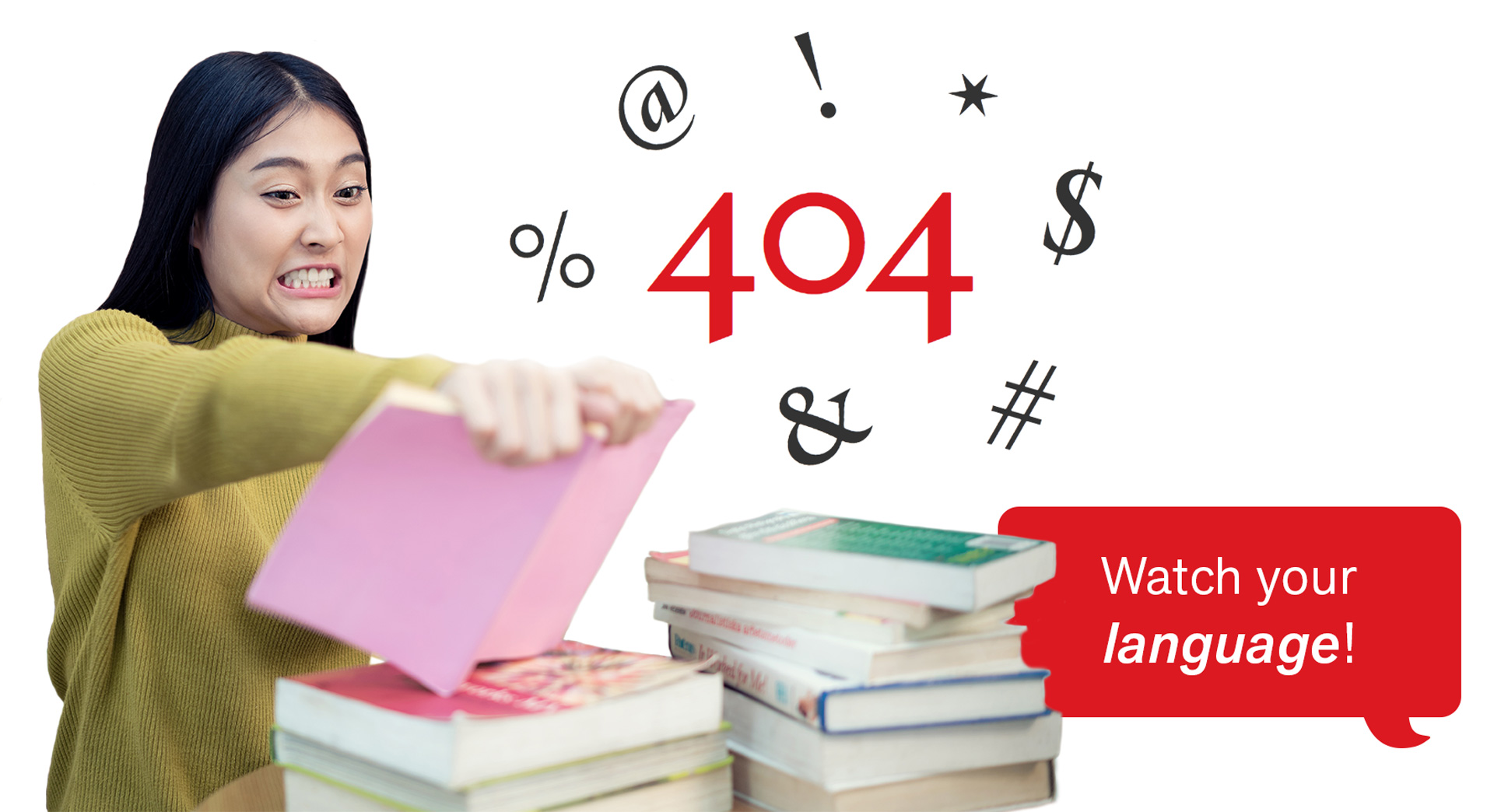
My heart’s desire is to turn reluctant readers into book sluts!” says Tori Jensen.
Jensen, a high school librarian from St. Paul, MN, isn’t out to corrupt kids. She’s simply trying to get them to read, especially those students who’d rather get sprayed by a skunk than curl up with a conventional tome. That’s why Jensen constantly booktalks hi/lo titles and uses them extensively with struggling readers. She also hand sells these turbocharged titles to every kid she can and reviews hi/lo books on Goodreads.com, a social networking site for readers.
Has her strategy paid off? You bet. Jensen’s fellow teachers now routinely send her students who can’t connect with books. Parents thank her for making a noticeable difference in the reading lives of their hard-to-reach children. And then there are those magic words that Jensen occasionally hears from her students, words that make all of that hard work worthwhile: “This is the first book I ever read from cover to cover.”
What exactly are hi/lo books? “Hi/lo,” as you probably know, means high interest and low level, low vocabulary, low word count, or low readability—all terms used for more than half a century. Years ago, when I was a small-town public librarian in New Hampshire, I heard high school kids raving about a book series set in a Los Angeles inner-city high school no less. And these weren’t kids who usually got excited about books. I was about to experience, like so many other librarians at the time, the Bluford phenomenon. Peggy Kern and Paul Langan’s “Bluford High Series,” which was launched by Townsend Press in 2002, caught many of us by surprise. The kids who introduced me to the series first heard about it from their friends. When I checked out the titles, I was shocked: these were hi/lo books, but with their kid-appealing plots, they were unlike any I’d ever seen.
What makes a hi/lo book both interesting and accessible? And do these kid-friendly titles belong in libraries and schools? Let’s start by tackling the first question.
What makes a book really interesting?
Obviously, a hot topic helps. In the world of hi/lo fiction and nonfiction books, that’s often synonymous with gritty, urban, edgy subjects like anorexia, body piercing, sexual harassment, divorce, and teen pregnancy. It’s generally accepted that boys have more reading problems than girls, and that may explain why hi/lo books tend to target testosterone-fueled topics. Although Florence Howe Munat never specifically mentioned boys or gender when she wrote about hi/lo books for SLJ back in April 1981, she noted that among the most popular topics were (in descending order) “sports, adventure stories, stories with animal or natural themes, history… mystery and suspense… science fiction, and humor.” And today’s hi/lo books, which include stories about gangs and extreme sports, may be even more tilted toward prototypically male interests.
If you want to hook kids who distrust texts, it’s also essential to offer stories with swift, easy-to-digest plots and short time frames, since research shows that it’s often tough for struggling readers to comprehend long breaks in chronology. Rather than focusing on characters, descriptions, and exposition, hi/lo books use action and dialogue to propel the story along. Take, for example, Alex Van Tol’s popular hi/low novel Knifepoint (Orca Soundings). “More than half of this short, fast-paced book is filled with deadly action,” writes one reviewer. “Readers won’t be able to turn the pages fast enough to find out how everything ends.” This probably explains why many educators often dismiss hi/lo books as nonliterary. But the fact is, many struggling readers reject what we adults consider literary in favor of plot-based stories, and that should probably give us pause.
Some purely aesthetic factors can also make a book more appealing, or less intimidating, to reluctant readers. Paperbacks generally have a cool factor, especially if they’re the same size as adult paperbacks. And it helps to have cover art that’s more modern and edgy than what’s typically found on most juvenile covers. Many publishers also opt for photos instead of illustrations on their jackets. (For some examples of kid magnets, see my list of recommended hi/lo titles on the next page.)
Layout-wise, ample white space is vital, and margins that create 3 ¼-inch lines may be ideal. Short chapters with lots of lead space, numerous illustrations, and type sizes of 10 or 12 point all make the text less intimidating. Larger type sizes look babyish, and smaller type sizes may frustrate struggling readers.
Although many publishers told me they’ve field-tested stories with teachers and students, there’s no real formula for assessing interest level. In the end, it’s strictly an editorial decision. But however a hi/lo book’s interest level is determined, it should be at least three years above a child’s current reading level—in fact, probably much more. There are many trade books out there clearly aimed at struggling readers, but the breadth of the span between interest and reading levels is what ultimately sets hi/lo books apart from more conventional titles.
How low can they go?
How do publishers create books that are easy for most kids to read? Unlike interest levels, which are subjective, they use a number of quantitative measures to determine how difficult it is to get through the text. At the word or semantic level, hi/lo publishers may manipulate the number of words and letter-sounds contained in those words, and the commonality of those words. Much is made of so-called “sight words”—those that are so common that they’re easily recognized by most struggling readers. In H.I.P.’s books, for example, 98 percent of all words come from a basic list of 800 frequently used words and phrases. If words aren’t recognizable, publishers then determine if they’re decodable—or can be easily sounded out phonetically even if they are unfamiliar. Struggling readers have difficulty figuring out complicated vowel combinations.
When it comes to syntax, publishers control the number of words per sentence and page, and the predictability and richness of the sentences. Shorter sentences with a low number of clauses are considered easier to read than longer ones. And with books, shorter works with compact story lines are generally considered easier for struggling readers. Although books that range from 100 to 125 pages are considered ideal, Saddleback Educational points out that extra white space is not only more visually appealing, but also creates more pages without adding more words, which make books more adult-looking and appealing to reluctant readers.
What’s behind one’s eyes is often just as crucial as what is in front of them. According to reading researchers Michael F. Graves and Raymond Philippot, “Familiarity of content and background knowledge required may well be the most important factor affecting text difficulty.” In other words, readers need to bring something to the table to understand what’s going on.
Hi/lo publishers also use readability formulas to fine-tune reading levels. One of the most popular measures, the Fry Readability Formula, compares the average number of sentences and syllables contained in three 100-word samples to determine a work’s grade level readability. The Lexile Framework (www.metametricsinc.com) uses word frequency and complexity, and the length and complexity of the various sentences to determine readability. Lexile scores are the most differentiated of the systems, ranging from 200 for beginning readers to 1,700 for more complex texts. Lexiles are sometimes preceded with the code HL for high interest plus low readability.
Another well-regarded formula, the Guided Reading System, developed by Irene C. Fountas and Gay Su Pinnell (www.fountasandpinnellleveledbooks.com), uses a complex set of criteria from word, sentence, and book levels to separate texts from kindergarten to eighth grade into 26 letter-identified levels. And then there’s the Flesch-Kincaid system, which analyzes the number of words in sentences and syllables in words, and Accelerated Reader’s ATOS Book Level rating system (www.renlearn.com), which takes advantage of semantics and syntax to adjust a book’s total number of pages and the length of its sentences.
To further complicate things, publishers often use multiple methods to determine readability. Saddleback Educational uses Flesch-Kincaid, ATOS, and Lexiles. H.I.P. Books uses Flesch-Kinkaid, Fry, and Lexile. Bearport Publishing uses Lexile, ATOS, and Guided Reading, but ultimately lets its editors make the final decision.
How do these systems compare? Second- to third-grade reading levels roughly correspond to Fountas and Pinnell levels L & M, ATOS’s levels 2.5-3.4, and Lexiles’ 350 to 450. Third- to fourth-grade reading levels roughly correspond to Fountas and Pinnell levels M & N, ATOS’s levels 3.0-3.9, and Lexiles 500 to 700.
The ruckus over readability
Although I’m a big fan of hi/lo books, many people think it’s a bad idea to manipulate text and readability. In fact, it’s a long-held belief that while short words may be more readable, varied vocabulary used naturally, with a few longer and more complex words, makes for more fluid reading, and the text appear more grown-up. As Stephanie Spadortcia, an associate professor at the University of North Carolina at Chapel Hill’s language and literacy division, says, “Instead of making a book easier, shortening sentences can actually make it harder by reducing both the syntactic maturity of the sentences and the overall passage coherence.” Ditto for Graves and Philippot, who note that research indicates “readability formulas may actually make texts more difficult to read.”
Proponents of authentic literature, or “real books” that don’t rely on readability formulas or controlled vocabulary, also say that simplifying vocabulary and sentence structure makes a book less readable. Instead of using hi/lo books with struggling readers, they use “quality” trade books. For example, teen librarian Hayden Bass, from Seattle, WA, says he finds little in the hi/lo market that he can booktalk to high school boys without feeling as if he’s offering them “baby books—or just as bad, boring books.” The alternative? Bass suggests giving reluctant readers nonformulaic titles such as James Proimos’s 12 Things to Do Before You Crash and Burn (Roaring Brook, 2011) and Paul Volponi’s Hurricane Song (Viking, 2008).
Should we really worry about the number of pages in a book? As Audrey Eaglen, the author of Buying Books: A How-to-Do-It Manual for Librarians (Neal Schuman, 2000), pointed out to SLJ’s readers more than 20 years ago (“Labeling the Dummies,” June 1990), when many reluctant readers were offered thin books to pique their interest, they chose thick tomes by Stephen King and V. C. Andrews—and that was long before Harry Potter arrived on the scene. Eaglen also contended that books labeled hi/lo identified kids as dumb. And as a public librarian recently reminded me, making hi/lo books look cool doesn’t help if they still look different: a cool book that marks a kid as a poor reader still marks the kid as a poor reader.
Although hi/lo books may be far from perfect, are they still worth adding to your collection? Absolutely. I’ve seen hi/lo books in action, and for many kids, especially struggling or disinterested readers, these titles may be the difference between reading and not reading, and between succeeding or falling further behind in school.
Libraries, schools, and hi/lo
What’s the best way to promote hi/lo titles? The same way you’d promote any book, advises Jensen, the Minnesota high school librarian. She routinely displays hi/lo books and shelves them together as a series so kids can easily find them—and come back for more. But Jensen doesn’t stop there: she brings hi/lo books to students’ attention every chance she gets. Jensen’s approach makes sense. Hi/lo books are designed for students who don’t choose to read for fun, so leaving them on a shelf is silly. After all, kids won’t find what they don’t seek.
Although hi/lo books are a staple in many school libraries, what about public libraries? Lisa Cole, a public librarian from Colorado, told me that when parents ask her for hi/lo titles, she immediately turns to the Orca series. She also likes Saddleback Educational’s “Carter High Chronicles,” which she describes as “the lowest reading level teen books I’ve seen, so there is definitely a place for them.” Cole also says that hi/lo books are useful for reaching English-language learners, an added bonus for public libraries. One good hi/lo you may have missed? Cole gives four stars to Ann Weil’s Pro Wrestling Greats (Capstone Press, 2011).
Many public librarians aren’t familiar with hi/lo books, especially fiction. Hi/lo nonfiction may already be a great fit for a public library collection, especially one in which juvenile, teen, and adult nonfiction are interfiled. But hi/lo fiction is less prominent in public libraries, and public librarians may have little awareness of the instructional methods that are used in school with their young patrons.
Public librarians may also have a completely different definition of hi/lo than the rest of the educational world. For instance, Lexington, MA’s Cary Memorial Library’s and Oregon’s Multnomah County Library’s lists of hi/lo books feature exclusively trade publications with less-pronounced differences between their reading and interest levels, such as Avi’s 1991 Newbery Honor winner, The True Confessions of Charlotte Doyle (Avon). Often, public librarians equate hi/lo with shortness—an important characteristic—but not one that’ll make conversations between public librarians and schools very meaningful. If this is what public librarians consider hi/lo, then they may see little need for the purposefully accessible books that most schools would call hi/lo.
As a public librarian who valued these books, I was often mystified by how publishers packaged them. In this standards-based age of education, parents would often point in dismay to the low grade level printed on a book’s cover. Rather than seeing it as an opportunity for their struggling children to read, many parents viewed it as a sign of underachievement. Fortunately, nowadays many hi/lo publishers no long print reading levels on their covers, but parents are increasingly aware of the meaning of terms like “Lexile,” and some want their kids to read books with higher reading levels, not lower. If public librarians are to integrate hi/lo books into their collection and their readers’ advisories, they must be ready to explain why these types of books are necessary.
The future is here to see
What about hi/lo publishing and digital technology? Saddleback Educational introduced Hi-Lo SMART Board Lessons last year, and the new line is so successful that it’s being expanded. Orca Book Publishers has already converted all of their titles into ebooks and distributes them individually, as well as through Tumble Books (www.tumblebooks.com). Bearport Publishing also sees ebooks on its horizon in the coming year. And Capstone, a publisher of hi/lo books for 20 years, plans to do more in a variety of digital formats.
This may mark a pivotal moment in hi/lo accessibility. Until very recently, hi/lo nonfiction, largely dependent on layout and color illustrations, was virtually impossible to reproduce as an ebook. As a result, only hi/lo fiction was available in a digital format. Now, with larger-format, color ereaders available and increasingly common, it may be much easier to put a digital device in the hands of struggling readers. And interestingly enough, after a decade of industry-wide focus on reluctant boy readers, Capstone is now looking at the rise of reluctant girl readers and plans to target them in the coming years.
One thing is sure, as long as reading scores remain a nationwide concern, both public and school libraries need to put accessible books in the hands of struggling readers. Hi/lo books may not be the perfect, or only, answer, but they definitely need to be part of the mix.
A&D Xtreme
An imprint of ABDO Publishing
Company, www.abdopub.com
Bearport Publishing
www.bearportpublishing.com
Capstone Press
www.capstone-press.com, Stone Arch Books, an imprint of Capstone Press, publishes contemporary fiction
High Noon Books
www.highnoonbooks.com
H.I.P. Books
High Interest Publishing
www.hip-books.com
Lerner Publishing
www.lernerbooks.com
Orca Book Publishers
www.orcabook.com
Saddleback Educational
www.sdlback.com
Townsend Press
www.townsendpress.com,
publisher of the “Bluford High Series”
| Author Information |
| Michael Sullivan is the author of Fundamentals of Children’s Services: Serving Boys Through Readers’ Advisory (ALA Editions, 2005). |


RSS


