


2018 School Spending Survey Report
SLJ Reviews the American Indian Youth Literature Award Winners and Honors | ALA Youth Media Awards 2026
Awarded biennially, the awards honor the best writing and illustrations by Native Americans and Indigenous peoples of North America. For this year, books needed to have been published between October 1, 2023, and September 31, 2025.
Awarded biennially, the awards honor the best writing and illustrations by Native Americans and Indigenous peoples of North America. For this year, books needed to have been published between October 1, 2023, and September 31, 2025.
American Indian Youth Literature Picture Book Award
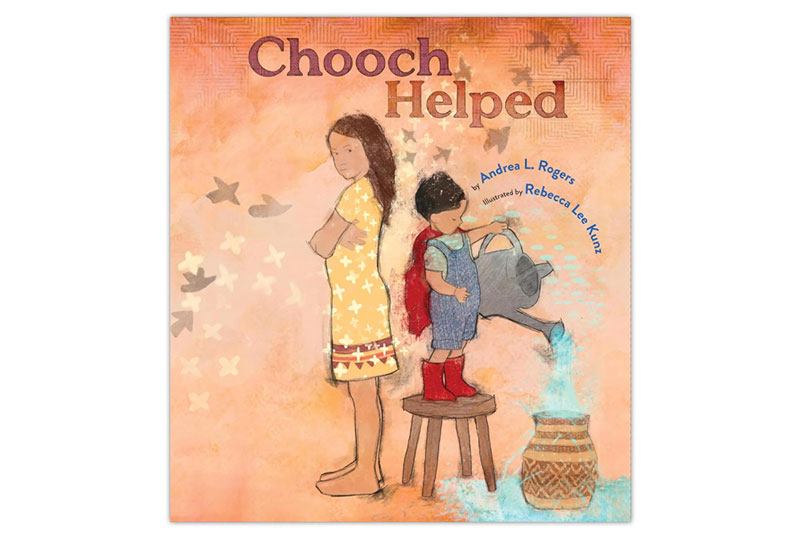
Chooch Helped by Andrea L. Rogers, illus. by Rebecca Lee Kunz. Levine Querido. ISBN 9781646144549.
K-Gr 4–Little brother Chooch (atsutsa, pronounced a-choo-ja, is the Cherokee word for boy) just wants to help his older family members and contribute in his own way. Whether it is helping with the grape dumplings, fixing the bikes, or assisting his big sister with constructing a clay pot, the sister’s patience is tested as her little brother looks up to her, but doesn’t perform tasks as well as she can. This story is a reminder that teachers were once students and to remember what it was like to be in the other person’s shoes, yearning to learn from those you look up to. The artwork is warm and flushed, almost like a heart pulsing from the warmth of inclusion and support. In dynamic, shifting perspectives, the illustrations are laced with Cherokee imagery and design, accommodating the Cherokee vocabulary words, which are offered with a simple pronunciation breaking down the syllables. The daily activities where Chooch “helps” (readers will see how loosely defined that word is) are intentional choices that are connected to important events that impacted generations of Southeastern tribes. VERDICT This recommended story reminds readers how they could lead by example for those who are curious and want to also be included in the joys of life, be it miniscule chores or creating art.-Kaitlin Srader
American Indian Youth Literature Picture Book Honors
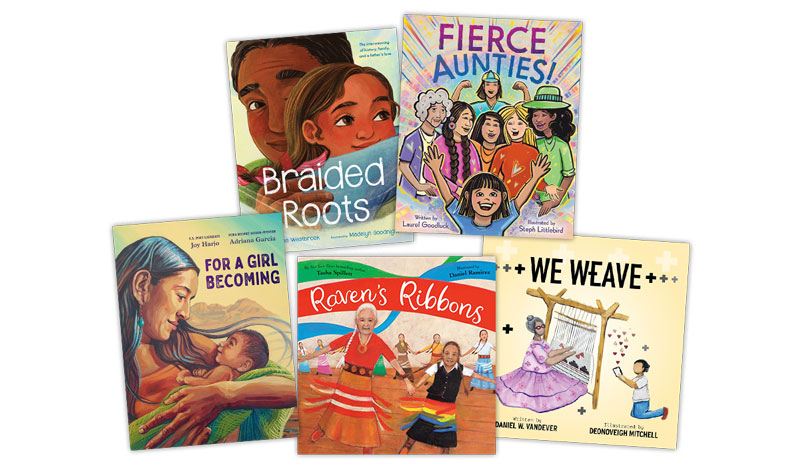
Braided Roots by Pasha Westbrook. illus. by Madelyn Goodnight. Scholastic/Orchard Books. ISBN 9781339015385.
PreS-Gr 2–As a young girl’s father lovingly braids her long hair, she reflects on how the braid links her to her close relatives and distant ancestors. As pink and brown ribbons are woven into a girl’s brown hair, her father tells her, “Our hair is our story. It tells us who we are, where we come from.” She looks at pictures displayed on the wall, including ones of her great-grandparents who “walked that beaten down path from Mississippi to Oklahoma” to her fourth great-grandmother, “enslaved like her ma, owned like her pa.” When the braid is done, the girl’s father looks on with pride as the girl twirls, her skirt and braid flying. The debut author based the story on her own life, and shares that she is of Black and Native American ancestry, and that some of her relatives were forced out of their homeland to walk the notorious Trail of Tears. Though the story resonates with the bond between a father and a daughter, too many questions are left unanswered for younger readers about the father’s pain, walking the trail, and what enslaved means. Without context provided by a caregiver or teacher, the main point of the story is easily overlooked. It’s a fine idea, but a somewhat disjointed result. Characters are depicted by Goodnight (Janie Writes a Play: Jane Yolen’s First Great Story) with brown skin. Includes an author’s note. VERDICT With enough context, this story could work for discussions of difficult, but necessary, topics in U.S. history.-Sue Morgan
Fierce Aunties! by Laurel Goodluck. illus. by Steph Littlebird. S. & S. ISBN 9781665948968.
K-Gr 4–Right off the bat, Fierce Aunties! is exciting. There’s such liveliness and vivacity with the title and the exclamation point. That carries on, the book exploding with appreciation for the dynamic women in a child’s life. The story follows a young girl celebrating the different aunties and their influence on her life. From the first page, the women burst into the narrative in a flash of color and fun. They’re coded with a range of ages and interests, but all show remarkable, blinding joy. Each auntie covers different types of development. They guide through competition and athleticism, academia, environmentalism, historical significance, etc. Regardless of what they’re teaching, it’s presented in a beautifully nurturing way. It’s not about forcing opinion. It’s about seeing individual potential and letting it bloom in safety. The book also points out the generational throughline of inspirational aunties. Goodluck highlights this in her final author’s note, shouting out her own fierce aunties and talking about where readers can find their own auntie figures. VERDICT A tale of feminine magic, power, and strength. A must-purchase and a wonderful read.-Cat McCarrey
For a Girl Becoming by Joy Harjo. illus. by Adriana Garcia. Norton. ISBN 9781324052241.
 K-Gr 3–A newborn baby’s family gathers to welcome her to the world in the opening stanzas of the U.S. Poet Laureate Harjo’s titular poem. Harjo ruminates on the sacred traditions that usher an Indigenous child into the world, traditions that bless the baby’s birth and the life that awaits. Encircled by rainbows, family, and ancestors long gone, the girl’s entrance into the world is marked by a galloping herd of wild horses “running the land, hundreds of them/ To accompany you here, to bless.” As she grows from a child to a teen to a woman, her plentiful and painful becoming is anchored by her ancestral legacy and Indigenous community. Harjo’s emotive refrain to “remember the source of the gift of all” emphasizes the privilege of growth and reminds readers that all roads lead back to home. Garcia’s delineated hues take many forms as curls of smudging smoke, tendrils of hair, and ceremonial dance shawls. The swirling linework feels like connective tissue unifying the illustrations and accentuating the poetic text. Each spread celebrates Native cultural identity and brings form to the metaphysical. VERDICT A stunningly written and illustrated work of children’s literature, and an essential purchase for school and public library collections.-Sarah Simpson
Raven’s Ribbons by Tasha Spillett. illus. by Daniel Ramirez. Little, Brown. ISBN 9780316422161.
PreS-Gr 2–An intergenerational story woven with love, inclusion, and joy. Raven loves to participate in round dances with Grandma, and his favorite part is to watch the ribbon skirts. She is revered for making ribbon skirts that are as beautiful as they are unique to the person they are made for: “Like people, no two skirts are the same.” When Raven asks “Nohkum, do you think a boy could wear a ribbon skirt?” Grandma replies that though she has lived a long time, she has never seen a boy wear a ribbon skirt. While Raven sleeps, Grandma thinks about all the ribbon skirts she has ever made and the people she has made them for and she sits down to sew a skirt that is as beautiful and unique as Raven. Hand in hand with Grandma, Raven and his rainbow ribbon skirt dance to conclude the story. The acrylic artwork, painted by Two-Spirit Ojibwe elder Ramirez, crosses pages beautifully in a way that evokes circular images throughout the story. It’s completed with a note from both the author and the artist and full-color endpapers. VERDICT A beautiful intergenerational Indigenous story, this book should be in every library.-Katherine Kefi
We Weave by Daniel W. Vandever. illus. by Deonoveigh Mitchell. South of Sunrise Creative. ISBN 9781737496434.
American Indian Youth Literature Middle Grade Award
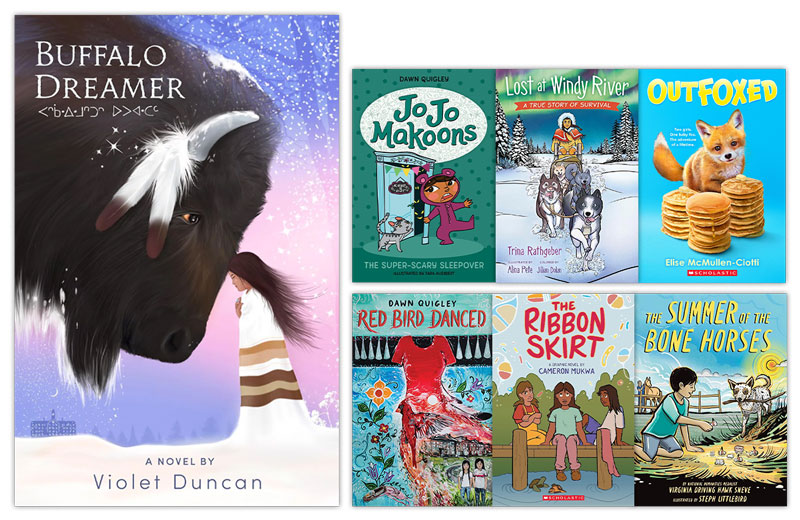
Buffalo Dreamer by Violet Duncan. Penguin/Nancy Paulsen. ISBN 9780593624814.
Gr 3-7–An important middle grade novel about a family reunion, as well as the histories of the Indian residential schools that were set up across the U.S. and Canada. Summer, 12, and her little brother Sage have traveled from their home in Arizona to visit their grandparents in Canada. Summer’s mother is Cree and her father is Apache Indian. Upon arrival at Kokom and Mosom’s (her grandma and grandpa) home, Summer is reunited with beloved family members including her favorite cousin Autumn. While on her travels, Summer has been dreaming about Buffalo Dreamer, a girl who is running to escape the horrors of residential school. Summer is puzzled and ponders their relevance to the excavation that is currently happening at the site of the old residential school that her grandfather attended as a child. When unmarked children’s graves are unearthed at the site, it devastates Summer while leading to more people in her life opening up about their experiences at these traumatic institutions. Based on Duncan’s family history, this novel balances an exploration of painful events with idyllic scenes of intergenerational love and connection. Beautiful descriptions of traditional Native American culture and dress make scenes vivid for readers as Summer’s family rides horses, picks berries, prepares meals, and shares stories, even ones that have remained unspoken. VERDICT A powerful addition to all middle grade library shelves highlighting a time in history that has been hidden and often forgotten in both Canada and the U.S.-Tracy Cronce
American Indian Youth Literature Middle Grade Honors
Jo Jo Makoons: The Super-Scary Sleepover by Dawn Quigley. illus. by Tara Audibert. HarperCollins/Heartdrum. ISBN 9780063315617.
Gr 2-4–Seven-year-old JoJo is back in another adventure on the fictional Ojibwe reservation where she lives with her family and friends. Jojo has been invited to her very first friend sleepover party and despite some nerves, is determined to muster her courage and face her fears. Full of JoJo’s funny and honest outlook on the world, and her charming circle of family and friends, this latest story is sure to please fans of the series. Full-color illustrations are featured throughout, along with a glossary of Michif and Ojibwe words and a note from the author and series editor (Cynthia Leitich Smith) giving context to their Ojibwe community and the theme of the story. VERDICT Recommended where other books in the series circulate well.
Lost at Windy River: A True Story of Survival by Trina Rathgeber. illus. by Alina Pete & Jillian Dolan. Orca. ISBN 9781459832268.
Gr 3-7–This adventurous graphic novel follows the real-life story of Ilse Schweder, a young girl from Cree Nation whose story of survival inspired famous Canadian author Farley Mowat’s books about life in the North. In 1944, Ilse had to rely on her traditional Indigenous knowledge to survive being lost and alone on the Arctic tundra. Schweder and her family are checking traplines near their home in Windy River Trading Post (modern-day Nunavut) when a sudden, intense snowstorm separates her from the rest of her family, and she is forced to survive on her own for several days. Colorful illustrations in classic comic-book style help readers explore the challenging landscape. Rathgeber, who is Schweder’s granddaughter, and Pete provide cut-outs and sidebars with extra explanations and images of Arctic and Indigenous culture, clothes, and environment. VERDICT An excellent choice for a book report and a good addition to a children’s nonfiction collection.-Meaghan Nichols
Outfoxed by Elise McMullen-Ciotti. Scholastic. ISBN 9781339014883.
Red Bird Danced by Dawn Quigley. HarperCollins/Heartdrum. ISBN 9780063223622.
Gr 4 Up–Quigley’s novel in verse highlights the beauty and struggles within Native American communities through the alternating lens of two preteens. Ojibwe Nation dancer Ariel, 11, is finding new purpose in her movements while trying to deal with the pain of her missing aunt. Her neighbor in the Intertribal Housing Complex is classmate Tomah, 12, who is a gifted oral storyteller afraid to open up about his reading difficulties. Both characters evolve through the process of finding their voice with hearty emotional impact. They work to overcome and finish strong, displaying pride in their community through their natural giftings. There is an emphasis on the #MMIW (Missing or Murdered Indigenous Women) social cry with statistics shared. The Ojibwe language and cultural practices are effortlessly infused in the free verse poems, with a glossary available at the end. VERDICT An impactful story about discovering how to declare yourself proudly and bring awareness to your community; this opens an important window into the modern-day life of Native American culture that has yet to be fully explored thoroughly in middle grade literature.-Lindsey Morrison
The Ribbon Skirt by Cameron Mukwa. Scholastic/Graphix. ISBN 9781338843262.
Gr 4-8–Anang, a nonbinary Indigenous 10-year-old, knows exactly who they are—it’s the world around them that struggles to understand. Anang dreams of wearing a ribbon skirt, a traditional garment for Anishinaabe women, at the upcoming powwow. Despite others insisting on seeing them as a boy, Anang embraces their identity as two-spirit—a person who exists beyond the gender binary. With unwavering support from their grandparents, Anang embarks on a journey to gather materials to create the ribbon skirt. What seems like a simple task soon becomes a spiritual adventure, guided by the spirits of animals and even the lake itself. Anang is an endearing protagonist who remains true to themself, even when faced with rejection from a former best friend. Alongside Anang, the narrative features supportive adults, all of whom are Indigenous. Anang may feel different, but by the end of their journey, they realize they are far from alone. This graphic novel tugs at the heartstrings. The story, though simple on the surface, explores deep themes of acceptance, friendship, belonging, and hope. The art features warm oranges and yellows, and moves effectively from realistic to surreal when Anang leaves the real world and enters the spirit world. Additionally, the book offers valuable back matter, including insights on ribbon skirts, the history of powwows, etiquette for non-Indigenous attendees, and more. VERDICT This tender and introspective graphic novel is full of hope and is a great choice for fans of Raina Telgemeier.-Amy Ribakove
The Summer of the Bone Horses by Virginia Driving Hawk Sneve. illus. by Steph Littlebird. Abrams/Amulet. ISBN 9781419759550.
Gr 1-3–In this spare and moving early chapter book, a Dakota boy spends the summer with his grandparents on their reservation while his father undergoes a serious operation. At first, Eddie struggles with homesickness and adjusting to life on the reservation, but new experiences with his grandparents—learning how to ride and take care of a horse, playing with toys made from cow bones, whistling through a blade of grass—eventually help him push through his worries about his dad. When his grandfather gets hurt, Eddie rises to the occasion to get him medical attention. Through cultural touchstones and resonant themes, Sneve and Littlebird sensitively capture the uncertainty caused by familial challenges as well as the resilience a child can derive from intergenerational bonds. The language is thoughtful and respectful of readers, and the pencil-like illustrations done in a limited palette of yellow, brown, and blue, offer a sense of place and authenticity. VERDICT Add this early chapter book to all emerging-reader collections for its pitch-perfect treatment of very real topics and its relatable protagonist.-Shelley Diaz
American Indian Youth Literature Young Adult Award
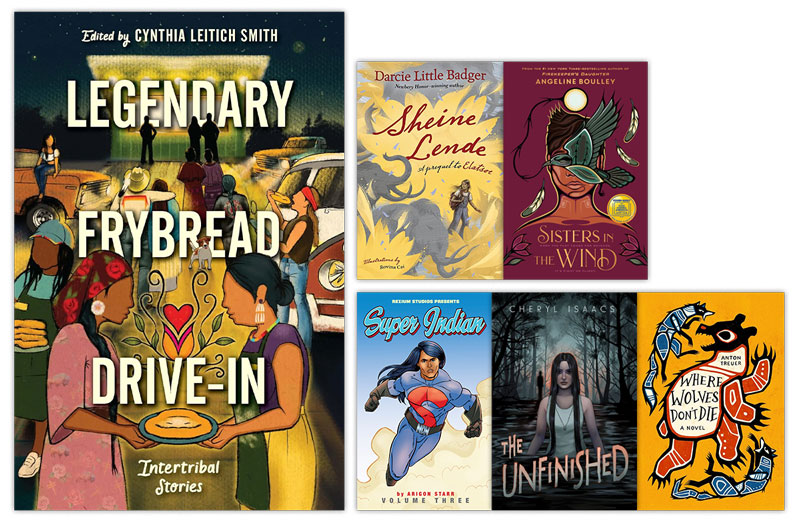
Legendary Frybread Drive-In: Intertribal Stories. edited by Cynthia Leitich Smith. HarperCollins/Heartdrum. ISBN 9780063314269.
Gr 8 Up–Each short story in this anthology follows an Indigenous teen who is in need of something—belonging, help with a task, safety. That something is always found at Sandy June’s Legendary Frybread Drive-In, a place where people come together from all corners, all times, and all tribes. This amazing place connects the teens in each of the stories, all of which are written by Indigenous authors and have their own unique perspective and style. For example, Darcie Little Badger’s “Game Night” is written in text messages within a D & D gaming platform where the players are talking about the Drive-In and how to find it. “Braving the Storm” by Kaua Mahoe Adams is written in beautiful verse and is about a girl who gets one last chance to visit with her Papa. As readers take in the stories, they will be transported time and time again to Sandy June’s, where the protagonists get more than just frybread. Each teen gets exactly what they need—and readers do too. VERDICT Hand this collection to any reader who is looking for a place made for them; they will find it between these pages.-Heather Lassley
American Indian Youth Literature Young Adult Honors
Sheine Lende: A Prequel to Elatsoe by Darcie Little Badger. illus. by Rovina Cai. Levine Querido. ISBN 9781646143795.
Gr 8 Up–This prequel to Elatsoe features Ellie’s grandmother Shane, a 17-year-old Lipan Apache, and further expands upon the strange and unique world. Shane and her mother track down missing persons using ghost dogs (familiar to those who’ve read Elatsoe), even when the families can’t pay them. This means Shane is used to barely scraping by, her deep practicality almost at odds with her unique power to raise the dead. When her mother disappears after tangling with a fairy ring, Shane will journey across the south and the world Below to find her. The narrative emphasizes generational trauma and the power of community with flashbacks, finding ways to ground the fantastical worldbuilding elements of vampires, fae, and ghosts in the culture and relationships Shane finds important. Little Badger artfully navigates Shane’s family history—from disasters to stolen land—and how they fight to reclaim their identity. While the novel stands alone, common elements from the first book reappear to add humor and tension. Part road trip, part classic quest, this novel manages to add fresh and exciting elements to the worldbuilding while retaining Elatsoe’s slightly spooky atmosphere. The flashbacks and changes in point-of-view slightly hinder the pacing, but readers will likely be too invested in Shane’s story to care. Shane and her family are Lipan Apache, with additional diversity in the supporting cast. VERDICT A wonderful addition to the Elatsoe universe with vital representation, worthy of any YA collection. Highly recommended.-Emmy Neal
Sisters in the Wind by Angeline Boulley. Macmillan/Holt. ISBN 9781250328533.
Gr 9 Up–An explosion at work shortly after a stranger drops off a note—“Lucy, come home where you are loved”—divides her life into pre-blast and post-blast. Lucy is an only child raised by her dad who lied about her Native American heritage and about her mother. Lucy ends up in foster care after his death. In her first placement, she meets Devery, who gives her advice on surviving the system. Lucy is eventually placed in a group home where she feels safe. Gradually, she realizes something is off. Her suspicions lead her to snoop, and she finds documents revealing human trafficking. Lucy flees with the evidence, fearing for her life, and tries to disappear. After the blast, Lucy is cared for by John Jameson and Daunis Fontaine as she recovers from her injuries. They try to persuade her to meet her mother’s family. She is leery of them but also terrified her secrets will harm them. Lucy is lured back to the group home where a final confrontation takes place. Lucy’s tough exterior hides her concern for others as she navigates situations involving abuse, drug use, and murder. The time line is between The Firekeepers Daughter and Warrior Girl Unearthed with Daunis and John’s relationship a secondary plot, but it’s a strong standalone story full of suspense and survival. There are trigger warnings as the book delves into difficult topics. VERDICT A gritty story of trust and betrayal, Lucy’s life absorbs readers and leaves them wanting more. A definite first buy.-Reviewed by Tamara Saarinen
Super Indian, Volume Three by Arigon Starr. illus. by author. Wacky Productions Unlimited.
The Unfinished by Cheryl Isaacs. HarperCollins/Heartdrum. ISBN 9780063287389.
Gr 7-10–Avid high school runner Avery, who is Kanyen’kehá:ka (Mohawk), finds comfort striding through the trails in the big forest of her small town, Crook Falls. While trail running, she must never leave the trail, which she always abides by—except this one time. Avery unexpectedly wakes something in the black water. She tries to conceal the truth about this new haunting figure from everyone. The hauntings become her worst nightmare when her best friend Key disappears and the reason for it seems to align with the terrifying figure. Before it becomes too late to save Key or worse, Avery seeks out her elders to gather clues on how to stop the terror and heal past trauma from the Ragged Man. Fright slowly escalates as more is revealed about the lore of the forbidden aqua void. With this fright brings bravery, a push to connect, and acceptance of change. This level of introspection may bore and drag out the plot for some. This chilling quest to save a best friend (and perhaps the town) reveals the bravery that Avery needs to come face to face with her greatest fears. Readers will finish this feeling spooked and reflective of their own secure attachments. VERDICT The eerie imagery is not extremely explicit, making this spooky read a tantalizing addition to middle school shelves.-Reviewed by Kaitlin Srader
Where Wolves Don’t Die by Anton Treuer. Levine Querido. ISBN 9781646143818.
Gr 8 Up–Ojibwe teen Ezra stands up to Matt, the school bully for harassing Nora, his crush, and injures himself. The next day, he and Nora learn Matt’s family perished in a house fire, and Matt, who survived, is blaming the fire on Ezra. Ezra's father Byron takes him up to “Red Gut,” their reservation in Canada, to stay with Grandpa Liam and Grandma Emma. He is told he will help Grandpa work the trapline—a dream come true for him to learn hunting and survival skills. Ezra is free from the tricky situation at school and begins to process his mom’s death, which strained his relationship with his dad, at their isolated trapping cabin. A long-buried family secret is revealed, and he learns how far Grandpa Liam will go to protect their family and friends. The narrative is well written with Ojibwe language scattered throughout. Grandpa Liam constantly educates Ezra on their history and culture, which sometimes sounds like a textbook. Ezra’s struggles with a crush, loss of a parent, and a bully will resonate with readers. Parts of the ending are predictable, but there is a twist. Stylistic sketches of a wolf begin each chapter, since Ezra’s family is wolf clan, and a bear sketch starts each section. Ojibwe translations are included, along with an author’s note. VERDICT A great first purchase for all libraries, with a unique hero’s journey for Ezra as he begins to assume adult responsibilities.-Tamara Saarinen

Added To Cart
RELATED


RECOMMENDED
CAREERS
The job outlook in 2030: Librarians will be in demand
CAREERS
The job outlook in 2030: Librarians will be in demand
ALREADY A SUBSCRIBER? LOG IN
We are currently offering this content for free. Sign up now to activate your personal profile, where you can save articles for future viewing
ALREADY A SUBSCRIBER? LOG IN
Thank you for visiting.
We’ve noticed you are using a private browser. To continue, please log in or create an account.

Add Comment :-
Be the first reader to comment.
Comment Policy:
Comment should not be empty !!!