


2018 School Spending Survey Report
A Few Big Questions with Carolina Ixta
Carolina Ixta's sophomore novel, Few Blue Skies, publishes in February 2026. Here, the author reflects on the idea for this ambitious novel, blurring the lines between fiction and nonfiction, and comparing the work to her award-winning debut.
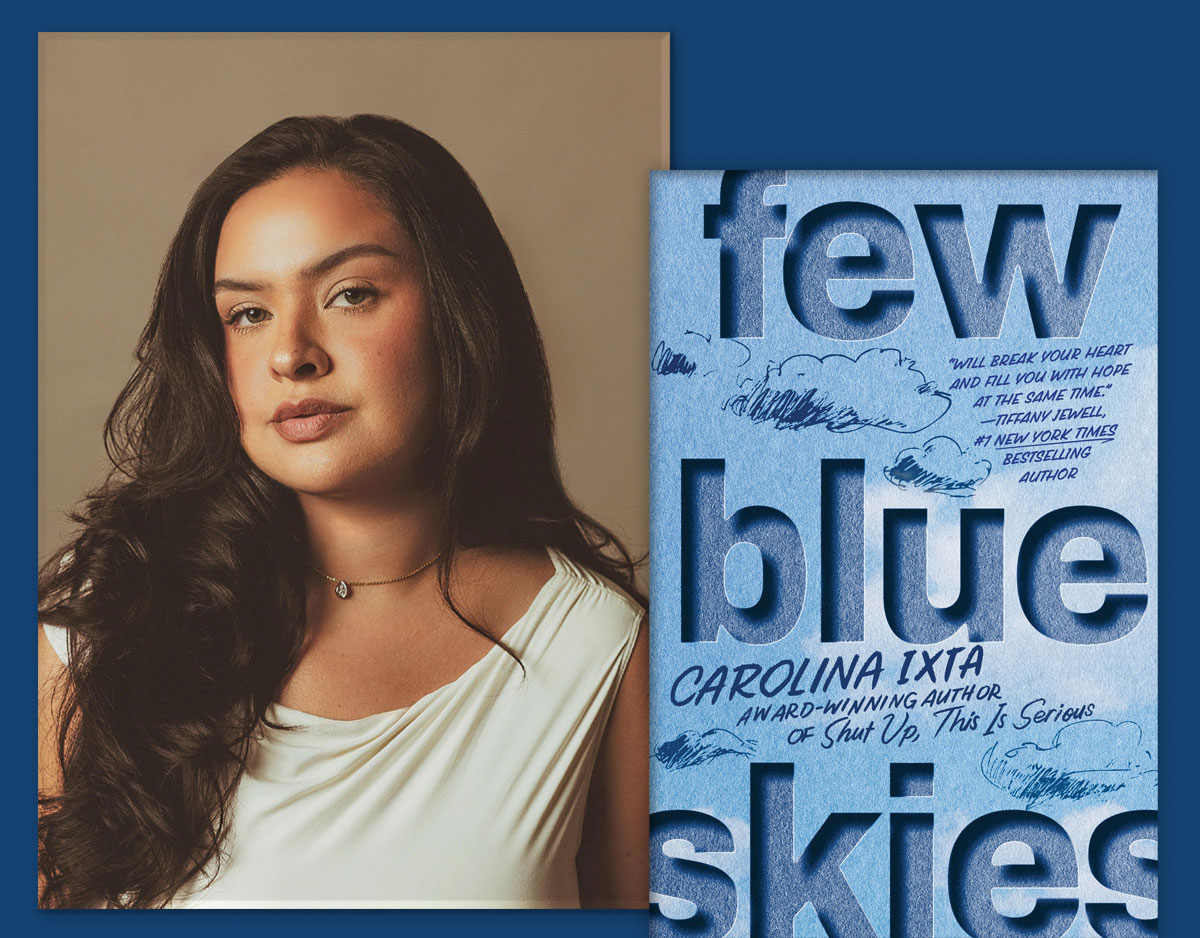 |
Photo by Sergio Gómez |
Carolina Ixta's sophomore novel, Few Blue Skies, publishes in February 2026. Here, the author reflects on the idea for this ambitious novel, blurring the lines between fiction and nonfiction, and comparing the work to her award-winning debut.
SLJ: Where did you come up with for the idea for Few Blue Skies? Is San Fermín based on a real place?
Carolina Ixta: Few Blue Skies was originally inspired by local environmental injustice. I had an idea for a story that revolved around the gasoline leaks from the Chevron gasoline refinery in Richmond, CA. Later, I wanted to write about the lead contamination found in drinking fountains in schools in Oakland. I thought I’d write something about either issue. But, in my early to mid-twenties, I was spending a lot of time in the Inland Empire. I’d spend a lot of time there as a child to visit my family, but upon re-entering the community, I began to learn about the warehousing industry that had boomed in the last decade or so.
I got the specific idea for this plot in the summer of 2022, after a warehouse was proposed to be built beside a high school. I was still finishing developmental revisions on my first book at the time, so I shelved the story. I remembered the concept during the summer of 2023. I tried to let it go many, many, many, many times for a number of reasons, but it always boomeranged back to me.
San Fermín is not based on one specific place. It was inspired by a number of cities in the Inland Empire– Riverside, Rialto, Fontana, Ontario, Bloomington, amongst others– and the environmental concerns they are facing. It was named after the saint of the bulls.
SLJ: In the book, the protagonists are connected by grief, each responding to and wearing it differently. It seems to symbolize the cycle of death and pain caused by climate disasters, particularly for brown and Black working-class people. Can you discuss how you came to create this connecting theme that is woven throughout the story?
CI: Grief is something that’s inevitable and innately human. No matter the type of grief, everyone is bound to feel it in one way or another. I think what separates us is the way we metabolize it. I think the state of our climate disaster is similar in that way—we will all feel it, are feeling it, in one way or another. I found it interesting how these characters were grieving community as they knew it while also grieving health, safety, and family as they once perceived it to be. I tried to have grief be the unifying force between all of the characters, but to depict their types of grief and how they processed it in different ways.
SLJ: What do you hope readers will take away from the story?
CI: It may sound trite, but I want young people to learn. Perhaps it’s the teacher in me, but some of my favorite books blur the lines between fiction and nonfiction. I am simultaneously entertained, engrossed in narrative, but learning. I think my job is to make something high-concept accessible to our youth, pushing against their passivity and apathy. It’s harder than it sounds. But needing to earn it makes it far more rewarding.
SLJ: You do a really good job of writing the minds of high school teens, especially their passions, fears, and relationships with peers and family members. Can you talk a bit about how you make your characters feel authentic?
CI: I think adults often forget that we are all still works in progress. Teenagehood is special because it’s the first time you get to become on your own terms. And with becoming comes many, many mistakes. I try to give my characters the freedom to make those mistakes, to be immature, and even to be unlikable at times. I write in the present tense for that reason—my characters are actively experiencing their flaws and reflecting upon them in real-time, and do not yet have the privilege of retrospect, the way adults do. Mistakes are some of the most human experiences we have, and I think we should really learn to value them. As I’ve gotten older and more compassionate with myself, I’ve learned they’re all just lessons in disguise.
SLJ: How does this book compare with your award-winning debut Shut Up, This Is Serious? How are they alike/different?
CI: The books are similar in some ways: they feature a Mexican protagonist, circle around themes of abandonment, and feature topics of discrimination. The emotional intensity was very similar—when I write, I feel like I’m pressing on a bruise to check if it’s still tender.
But, I think this book is very different. The setting is different. The voice is different. The conflicts are different. And, I did that on purpose. I really wanted to stretch myself as a writer. I’d heard many warnings about the sophomore jinx and knew that, no matter what, writing my second book would be a challenge. I figured if it was going to be hard, I was somehow going to make it as hard as it could be. The plot itself was ambitious, thinking of how so many separate parts could crescendo.
But, this book really pushed me from a craft perspective. I worked very heavily on the weight of some sentences. It pushed very personal ways, as well. I confronted many things in the process that I hadn’t wanted to. I’m surprised I wrote it at all, but very grateful I got through it.

Added To Cart
RELATED


RECOMMENDED
CAREERS
The job outlook in 2030: Librarians will be in demand
CAREERS
The job outlook in 2030: Librarians will be in demand
ALREADY A SUBSCRIBER? LOG IN
We are currently offering this content for free. Sign up now to activate your personal profile, where you can save articles for future viewing
ALREADY A SUBSCRIBER? LOG IN
Thank you for visiting.
We’ve noticed you are using a private browser. To continue, please log in or create an account.

Add Comment :-
Be the first reader to comment.
Comment Policy:
Comment should not be empty !!!